
Project-first
Every project has its own agent, files, and changelog. Notebook projects live in your data repo; repo-backed projects clone an external git repo as the agent’s working directory — and a notebook can be promoted to one later.

Try it on your own Claude Code history, in one command:
cd ~/code/some-project # somewhere you've used Claude Codenpx @edspencer/paddock --herePaddock opens that directory as a workspace and offers your existing sessions for import — nothing to install, nothing to clone. What it writes to the directory →
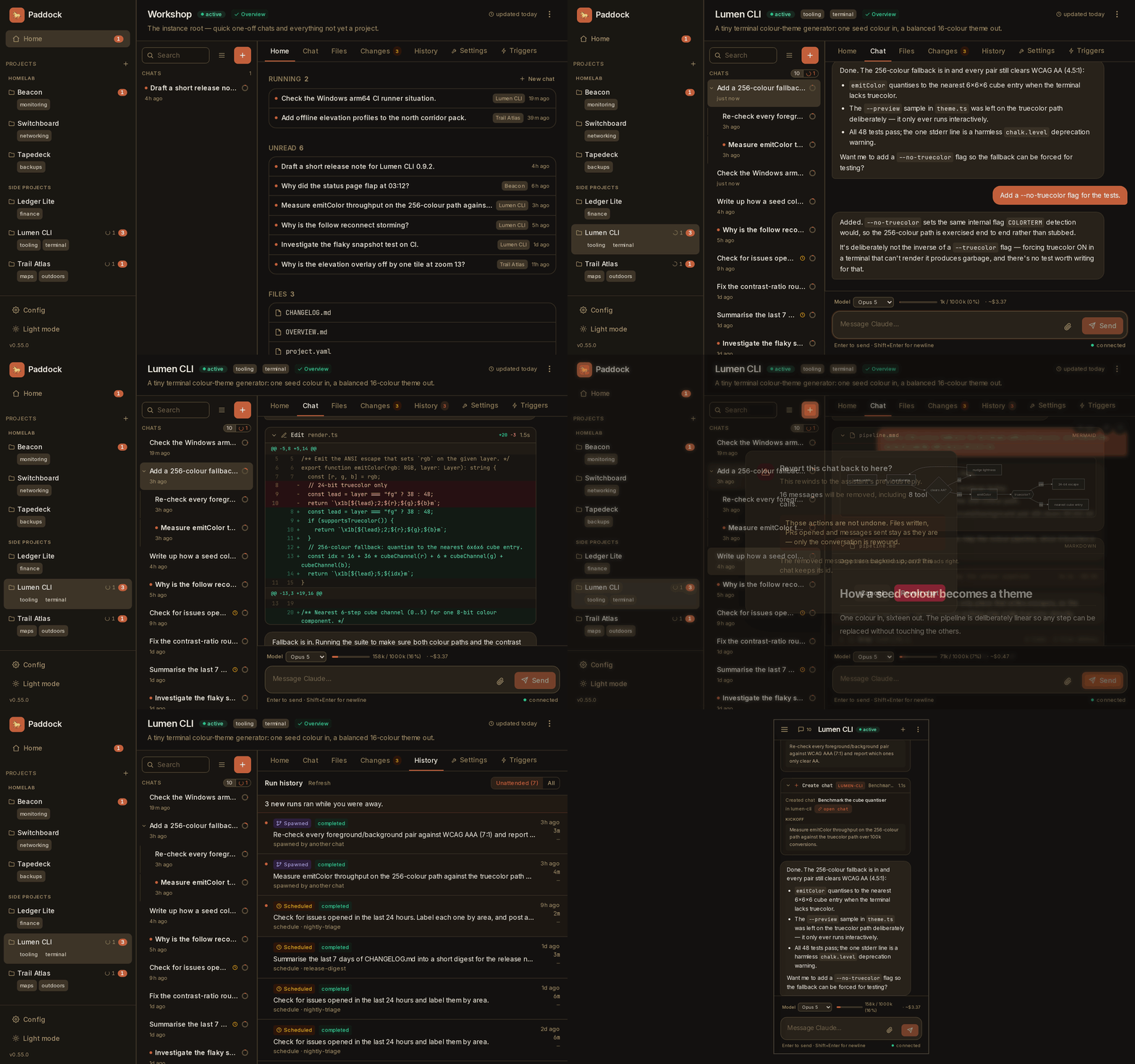
Paddock is a project-first launchpad for herdctl. It turns Claude Code into something you run on a server and reach from a browser: long-lived agents, one per project, whose chats persist and resume — instead of a laptop full of terminal tabs you can’t get back to from your phone.
A project is just a directory. Paddock runs Claude Code in it — a herdctl agent whose working directory is that project — and the chats you see in the UI are that agent’s sessions, persisted on disk and resumable across reloads, reconnects, and devices.
And a chat isn’t the only way work starts. Turns run on a schedule, react to events, and can be driven by an external MCP client — so a project keeps moving while you’re asleep, and you read the transcript in the morning.
Paddock isn’t just for software engineers. A project can be a codebase, but it
can just as easily be a research notebook, a writing desk, or a home-ops runbook —
anything you’d want a capable, always-available agent to work on. It shines when you
run it on an always-on machine and give its agents the tools they need (a scoped
GitHub token, ffmpeg, whatever your work calls for). See
Who Paddock is for.
Project-first
Every project has its own agent, files, and changelog. Notebook projects live in your data repo; repo-backed projects clone an external git repo as the agent’s working directory — and a notebook can be promoted to one later.
Persistent, resumable chats
Server-hosted sessions survive reloads, reconnects, and devices. Fork, queue-while-streaming, stop, search, pin, and archive are built in, and a chat that gets stuck is nudged back to work.
Real tool use, streamed live
Replies stream token by token. File writes, commands, and nested sub-agents render as live cards as they run, with per-chat cost and a context meter you can read at any point in the transcript. Send it files and images, too.
Work that starts itself
One triggers model covers both halves of unattended work: cron schedules and event hooks that fire a scoped agent when something happens. Run history shows what ran while you were away.
Yours to host
One npx command to try it on your laptop. For always-on, two official
images — a lean base and a devbox with the full coding-agent
toolbox — plus ready-made Docker, Proxmox, Kubernetes and
reverse-proxy-auth recipes. Bring your own authentication; it ships with
none.
Open at both ends
A thin project layer over the herdctl FleetManager, so anything the fleet
engine does Paddock can wire in. On the other side, a credential-gated
management API at /mcp lets an outside MCP client drive it — read-only
until you say otherwise.